A Born-and-Raised Carioca Reveals:
The Hidden System That Makes Rio
Completely Readable From The Moment You Land
Even if you have never been here before. Even if you don't speak Portuguese. And even if everyone you know has told you to be careful…
What you are about to discover in the next few minutes will change the way you move through this city forever. But before we continue — you must understand that the system I am about to share is not reversible. Once it is inside you — once you have read it properly and let it install — you will never walk into a new environment the same way again. Not just in Rio. Anywhere.
It sounds unbelievable, doesn't it? I thought the same. But today I know better.
Even being extremely sceptical — this system worked. Far better than I ever imagined. Because today, I move through Rio the way I was born to move through it. And the city that once felt threatening has become the most familiar place in the world.
This is the story of how I went from arriving in a city I couldn't read — to never feeling unsafe in it again.
My name is Jessica. A few years ago, I landed in Rio de Janeiro for the first time.
I had done everything right. I had read the TripAdvisor reviews. I had watched the YouTube vlogs. I had saved the blog posts — the ones that told me Ipanema is safe, that Santa Teresa is charming, that you should take the cable car to Sugarloaf at sunset. I had booked a tour guide for day one.
There are entire industries built around helping people navigate Rio. Apps. Guides. Walking tours. Forum threads with thousands of upvotes. I had followed all of it. I was not going in blind.
And yet — from the moment I landed at Galeão — I felt it.
The tightness in the chest. The hypervigilance. The constant calculation of whether the street ahead was safe or not. I did not know which neighbourhoods were actually dangerous versus which ones just looked rough. I did not know whether the crowd I was about to walk through was fine or not. I had no system. I had a list — and a list is not a system.
Every source I had found was written by someone who visited. They gave me their version of Rio. Not Rio's version of itself.
The tour guide took me to Santa Teresa. Selaron Steps. The viewpoint everyone photographs. He kept me safe. He also kept me on the surface. And I could feel the gap — between the city I was walking through and the city that actually existed on the other side of it — without being able to cross it.
I came home intact. I told people it was incredible. I meant it.
What I didn't know — what I couldn't know — was that I had spent ten days inside a four-block version of a city that goes on for miles in every direction. I had been in Rio. I had never been inside it.
Six months later, a friend introduced me to Vitor.
The name meant nothing to me. But she said: he was born here. He has never left. And he knows something about this city that no guide, no blog, and no tour operator has ever been able to tell you.
Of course I was sceptical. I had already done the research. What could one person know that an entire industry had missed?
The moment he started talking, I understood.
He didn't talk about safety tips. He didn't give me a list of neighbourhoods to avoid. He talked about literacy. "Rio has a language," he said. "Every street is saying something. Every neighbourhood has a grammar. You arrived not knowing how to read. So everything looked the same to you — safe or not safe. That is not how the city works. That is not even close to how the city works."
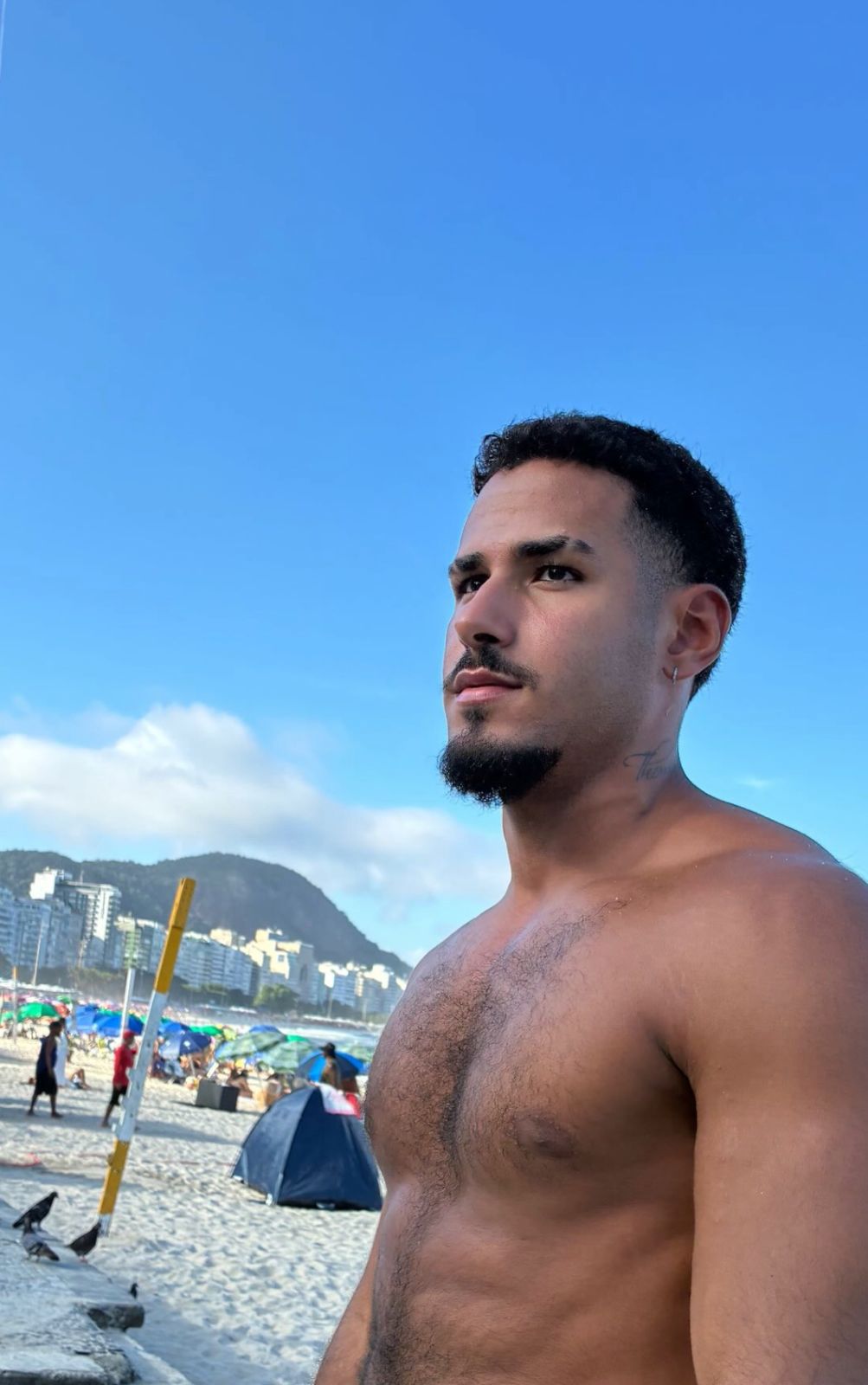
Before I could ask him how, he said the line that reorganised everything:
"The tourists who feel safe in Rio are not braver than the ones who do not. They arrived knowing how to read it. That is the only difference. And that is entirely teachable."
How did he know?
I looked at him and I felt it — the exact shape of what I had been missing. Safety is not a personality trait. It is not something you have or you do not. It is a skill — built from pattern recognition, environmental reading, and knowing what signals to look for.
I had been afraid in Rio not because Rio is dangerous. I had been afraid because I was unfamiliar. And unfamiliarity is curable.
What happened after that conversation changed the way I travel forever.
Vitor had watched foreigners arrive in his city his entire life. Tense. Vigilant. Moving wrong. Staying in four safe blocks of a city that goes on for miles in every direction. Every tour guide, every blog, every app they came with was built by someone who visited — someone who saw the surface and wrote down what they saw.
He spent two years figuring out how to give people what he knows without being there in person. The complete system. The way a Carioca has always read a street — assembled for the first time into something a foreigner could absorb on a flight and walk out with the next morning.
He called it leitura de rua — street reading. Seven signals, run automatically by every Carioca in every environment. Not a checklist. A perceptual scan that fires in the background, surfaces only when something is worth surfacing, and gives you the same environmental awareness Vitor has been running since he was nine years old.
I read it on the flight back to Rio.
By the time the doors opened at Galeão — the framework was already running. And then:
And it was not just me.
"I would not have survived my ten days in Rio without the guide. The info was on point every single time — best blocos, no wrong weather, no confusion. Everything in one place. You made my trip as enjoyable and carefree as possible."— Member · After a 10-day trip · Sent unprompted on return
"Went to Beco do Rato on the recommendation — Blocos dos Batuqueiros. My mind was blown. THE best bloco I've been to in Rio. Thank you."— Member · Carnival week · Sent with photo from the venue
"Headed to the airport now. Thank you so much for making my time here such a delight."— Member · Last day in Rio · Sent on departure morning
"You were a great help today. Just wanted to say Muito Obrigado."— Member · Mid-trip · Sent same evening
The Unwritten Map
47 pages. The complete street-reading system that turns Rio from a city you're visiting into a city you're inside.
The seven-signal leitura de rua framework — the complete environmental scan every Carioca runs automatically. The zone-by-zone timing rules. The transport decision tree that saves you R$150 on arrival alone. The four signals that mark you as a tourist from forty metres — and exactly how to stop sending them. The robbery response protocol. The neighbourhood guide that tells you not just where to go but when and why. The phrase sheet that changes how people treat you from the first conversation.
Not a list of tourist attractions. Not a safety checklist. The cognitive system underneath all of it — the way a Carioca actually reads this city, written down explicitly for the first time so that you can absorb it in two hours and walk out with it the next morning.
Every page is something you will use the day after you read it. Read it on the flight. By the time the doors open at Galeão, Rio is already readable.
A private walking orientation in Rio currently runs
R$450 – R$800 per hour
The Unwritten Map
$19
One-time · instant download · less than the taxi you won't overpay for
After you download — I will show you something that walks you through your first 24 hours in real time. The guide gives you the framework. The Fast-Start Audio Walk plays in your earphones as you land, as you take your first walk, as you go out your first evening. Vitor's voice in your ear from the moment the doors open at Galeão. Three tracks, 22 minutes, starting from the moment you land.
✦ I'm Going To Rio — Give Me The Map ✦Delivered to your inbox in 60 seconds · 30-day money-back guarantee
⚑ You must read this before you land. The framework only protects you if it is already running when you arrive. ⚑
The time has come to make a decision.
And what you do now will define what your Rio trip looks like — from this exact moment.
One of two things will happen today.
That small voice of scepticism will start speaking louder. And as always, you will let it stop you. You will land in Rio with the same list everyone uses, stay in the same four safe blocks, come home with the same good photographs. You will say it was incredible. You will mean it. And you will never know what was behind every street you didn't walk down.
Or…
You will realise that Rio is not a city you figure out on the ground. It is a city you read. And reading it is a skill — one that takes thirty years to build naturally, or two hours on a flight with the right guide. You will land already inside it. You will move through it the way Cariocas move through it. You will come home with the real version.
You deserve the real version. The version that changes the way you think about what a city can be. The version where a waiter starts your coffee before you order it, where you take the bus at 10pm without a second thought, where you sit at a table on a side street in Botafogo — no tourists, Portuguese-only menu, best food of your life — and understand for the first time what it feels like to be inside a city instead of visiting one.
If not now — when?
Instant download · 30-day money-back guarantee · Read on the flight